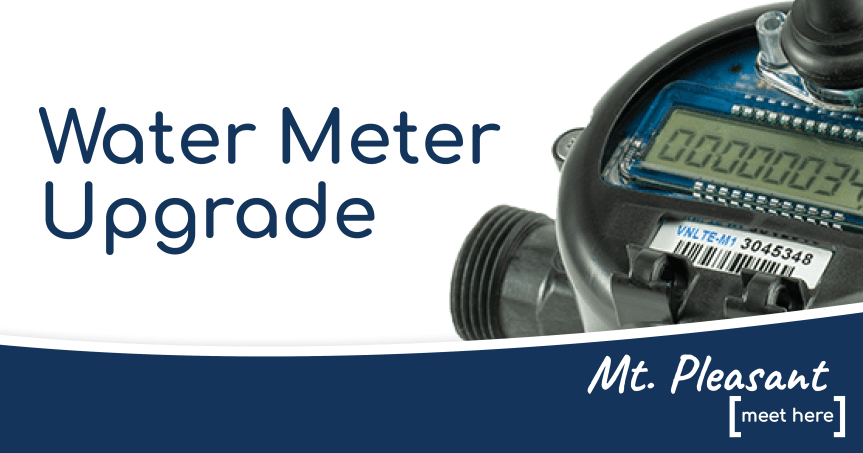
The City of Mt. Pleasant is working with technicians from HydroCorp to complete the second year of two important water system updates for properties within the city limits. These updates include cross‑connection inspections and the installation of new, upgraded water meters.
These inspections and water meter installations are required and are provided at no cost to residents. HydroCorp will not charge customers for either service. To ensure continued water service, all properties must participate in the new water meter installation program when scheduled.
This work is being completed in phases over multiple years, and not all properties are scheduled for 2026. Only properties selected for this phase of the program will be contacted this year.
Checking for potential cross connections
A cross connection is a point in a plumbing system where substances such as chemicals or irrigation water could accidentally come into contact with the potable (safe) drinking water supply. These connections are most commonly found at outside hose connections or residential irrigation systems.
Exterior inspections have been completed throughout the city in recent years. In many cases, a previous inspection may satisfy current requirements. However, all water meters still need to be replaced.
Replacing all water meters within the city limits with advanced digital meters
The City is replacing existing meters with advanced digital water meters that offer improved accuracy and greater insight into water use.
Features include:
- Efficient remote meter readings
- Access to water consumption history
- Notifications and alerts
- Optional phone app to monitor water usage and system operation
HydroCorp technicians will need to enter residences to complete the installation. All personnel will be clearly identifiable by a HydroCorp company shirt and official identification badge.
The water meter installation typically takes less than 45 minutes.
HydroCorp Letter
Only customers who are scheduled for this phase of the program will receive a letter from HydroCorp. If your water meter was replaced during the 2025 phase of the program, you will not receive a letter and no additional action is needed at this time.
A letter from HydroCorp with instructions for scheduling a water meter installation appointment will be mailed to customers selected for this phase.
Appointments are available Monday through Thursday, 8 a.m. – 6 p.m.
Customers may choose from three time blocks:
- Four-hour window from 8 a.m. – 12 p.m.
- Four-hour window from 12 p.m. – 4 p.m.
- Two-hour window from 4 p.m. – 6 p.m.
Please note that multiple customers may be scheduled during the same time window, and technicians may arrive at varying times within that block.